
Australia rewards travelers who plan ahead. A single road trip can move between glass-walled city laneways, red dirt tracks, and rainforest boardwalks within the space of a few days. Packing for one environment alone is rarely enough.
The country's scale is part of the challenge. Distances between towns can stretch into the hundreds of kilometers, and mobile coverage often disappears long before the next servo comes into view. A road trip itinerary that swings from Sydney's CBD to a national park gorge demands a packing list built for contrast, not convenience.
Clothing That Works in Two Worlds
Layering is the most practical strategy for a country where mornings can be cool and afternoons brutally hot, sometimes on the same day. Lightweight, breathable fabrics suit the cities, while a packable rain shell and a warm layer cover everything from coastal showers to chilly nights inland.
Footwear deserves particular attention, since city sightseeing and bushwalking place very different demands on a single pair of shoes. Many travelers settle on a versatile pair such as New Balance walking shoes, which offer enough cushioning for long urban walks while still holding up on uneven park trails. Having one reliable shoe for both settings also frees up suitcase space that would otherwise go to a second pair.
A second, more rugged option is worth packing for travelers planning serious time in national parks, where loose gravel and exposed roots are common. Closed-toe sandals or light hiking shoes can serve as a backup for water crossings or muddy boardwalks.
Sun Protection Is Not Optional
Australia's UV exposure ranks among the highest in the world, and the risk is not limited to obviously sunny days. Authorities note that UV radiation can be high even on cool and overcast days, so weather alone is a poor guide to when protection is needed. Australia has some of the highest levels of UV radiation in the world, and just 15 minutes of unprotected exposure when UV levels are 3 or above is enough to start causing skin damage.
The long-running national guidance distills sun safety into five habits. The advice is to slip on protective clothing, slop on water-resistant, broad-spectrum SPF50+ sunscreen, and slap on a broad-brimmed hat, along with seeking shade and sliding on sunglasses that meet local standards. For road trippers, this translates into packing a hat with real brim coverage, a stocked sunscreen bottle kept within reach in the car, and sunglasses rated for UV protection rather than purely cosmetic ones.
Reapplication matters as much as the initial application, particularly during long stops at lookouts or swimming holes. Sunscreen should be reapplied every two hours, and more frequently after swimming, sweating, or towel-drying.
Navigation and Connectivity Backups
Mobile signal cannot be assumed once a route leaves major highways, which makes offline tools a packing priority rather than an afterthought. A downloaded offline map, paired with a printed or app-based version of a regional fuel finder, can prevent the kind of detour that turns a scenic drive into a stressful one.
A portable charger is a small item that solves a recurring problem, since phones doing double duty as maps, cameras, and music players tend to drain quickly. Travelers heading into more remote stretches sometimes add a paper map as a low-tech fallback, useful precisely because it needs no signal or battery at all.
Vehicle and Safety Essentials
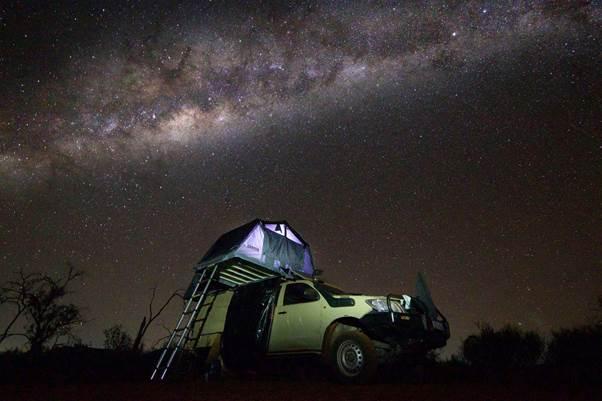
Before any long stretch of driving, a basic check of tyre condition, fluid levels, and spare tyre functionality can prevent the kind of breakdown that is merely inconvenient near a city and genuinely risky in the outback. A first aid kit stocked with current supplies, rather than one left untouched for years, belongs in every car regardless of route.
Reflective sun shades for the windscreen and windows are worth the small amount of packing space they take up, since a car left in direct sun for hours can become unbearable to re-enter. For drivers heading onto unsealed roads, even briefly, a set of compact recovery tracks offers a low-cost way out of soft sand or mud without needing outside help.
Packing for the National Park Stretch
National parks introduce their own set of requirements, starting with self-sufficiency around food, water, and waste. Many parks ask visitors to carry rubbish back out with them, since on-site bins are often limited or nonexistent.
A reusable water bottle is both a sustainability choice and a practical one, given that tap water across most of Australia is safe to drink straight from the source. Some park reception desks and trailheads also operate as cash-free or remote locations, so carrying a charged phone with offline park information downloaded in advance is worth doing before mobile signal disappears entirely.
Entry fees vary by state and park, and a few of the most visited sites charge a flat rate per person rather than per vehicle. Uluru-Kata Tjuta National Park costs $38 per adult for three days of entry, while a Western Australia park pass runs $70 for four weeks. Checking these costs ahead of time, alongside opening hours and any seasonal track closures, avoids surprises at the gate.
Comfort Items That Earn Their Space
A picnic blanket or lightweight rug pulls double duty as a rest stop accessory and an impromptu seat at a lookout point, and it folds small enough to avoid taking up real luggage space. According to one detailed outback travel guide, a portable solar shower can also make a meaningful difference on multi-day stretches without powered campsites, offering a basic wash option when showers are otherwise unavailable.
A car fridge or a well-insulated cooler bag matters more in Australia's climate than it might elsewhere, particularly in the northern states where food safety becomes a genuine concern rather than a minor inconvenience. Travelers covering long distances often find that a reliable packing checklist built around their specific route, rather than a generic template, catches the items that matter most for their particular mix of city stops and remote stretches.
Building a List That Fits the Route
The most effective packing strategy treats a road trip as several distinct trips stitched together, each with different demands. City days call for comfortable, presentable clothing and minimal gear. National park days call for sun protection, sturdy footwear, and self-sufficiency on food and water.
Travelers who pack with that contrast in mind, rather than defaulting to a single packing list for the entire journey, tend to arrive at each stop better prepared. Given the distances involved and the unpredictability of Australian weather and terrain, that preparation often makes the difference between a smooth trip and a difficult one.
